Nehru The Debates that Defined India
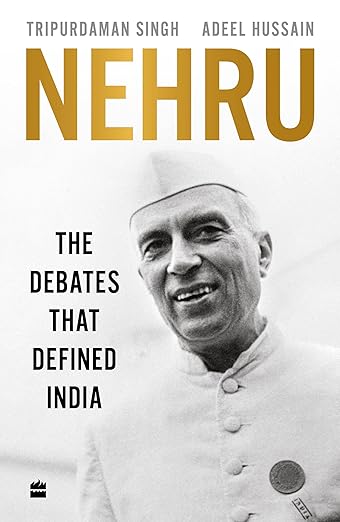
As an amateur student of history, I have always tried to better understand the events around the time India gained freedom from Britain. Given the noise today and binary interpretation of events, it becomes difficult to appreciate the role played by individuals and understand the currents of fate that led to how India gained freedom and was divided into 2 countries.
This book by Tripurdaman Singh and Adeel Hussain is an interesting read as it covers the debates Nehru had with his contemporaries. With a light introduction on the dynamics leading up to the debates and the exchange of letters, the book contains the exchanges that shows the thought process of Jawahar Lal Nehru, Muhammed Iqbal, Muhammed Ali Jinnah, Sardar Vallabhai Patel, and Syama Prasad Mookerjee.
On Nehru's debate with Iqbal, some of the things that caught my attention are:
- Mohammed Iqbal couldn’t submit his thesis to Heidelberg University in Germany because his thesis was in English and the university felt that English was unsuitable for academic pursuits. Interesting times!! I am quite sure that a lot of people today will find this incident funny. Sadly, in every era, humans have found language as a reason to not to talk to each other.
- An interesting quote from the book and from Mohammed Iqbal’s letter - “The life history of nations shows that when the tide of life in a people begins to ebb, decadance itself becomes a source of inspiration, inspiring the poets, philosophers, saints, statesmen and turning them into a class of apostles whose sole ministry is to glorify, by the force of a seductive art or logic, all that is ignoble and ugly in the life of their people.”. How profound and timeless!!
I am no expert and therefore, cannot comment much on the exchange between Nehru and Iqbal. What I learnt is that it is difficult and in hindsight, not the right approach, to apply ideas of western democracy to a nation like India that is home to multiple religions and cultures like no other nation in this world.
The letter exchange between Nehru and Jinnah are fascinating. Those exchanges are a masterclass in talking past each other. It would be unfair for me to comment on the larger equation that both had with each other. However, from the letters, one gets the feeling that neither had the intention to meet and resolve any issues. Given that Nehru was the one who initiated this discussion, I am curious to know what he had in mind. Since the letters refer to the exchange between Jinnah and Gandhi, an appendix with those letters would have been very helpful in getting more context on the ongoing debate. Both individuals seem to operate with a different perspective. While Jinnah’s main concerns were around the Muslim sovereignity in India, Nehru had more grandiose ideas around unemployment, poverty and world war in mind.
Exchanges between Nehru and Patel left me confused. The “insights” that I have learned from social media tells me that there were differences in their style of working. However, they worked together for a long time based on their shared values and priciples defined by Gandhi. The first letter in the book is from Nehru to Patel and almost feels like registering an official note of hurt feelings. Given that we are talking about two adults who also happen to know each other since so long, I don’t understand why Nehru could not have just walked up to Patel and talk his heart out. In fact, Patel says the same thing in his reply to Nehru’s letter. Maybe those were different times where communicating via letters was the preferred mode of communication. Patel does demonstrates an amazing foresight on how India should prepare for handling relations with China. His articulation on the steps that India needs to take is quite comprehensive. As an engineer, I look up to those rare members who can break down a plan into concrete steps. Reading his letters definitely gave me the impression that I am reading a letter from someone who knows how things work. Also, the book does not have Nehru’s response to Patel’s letter on the China policy. Not sure if there wasn’t one or the authors did not include it.