Medeleyev's Dream The Quest For The Elements
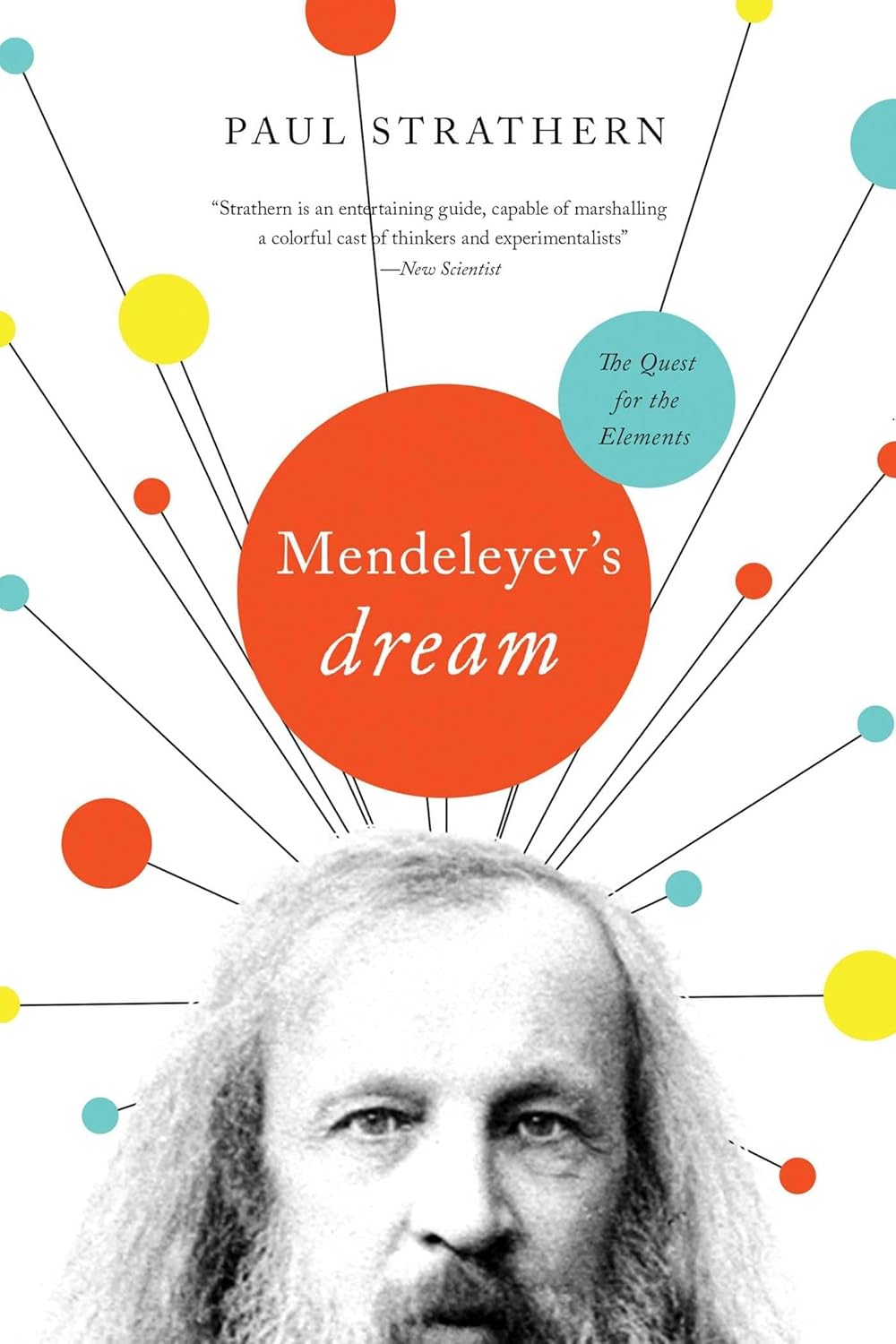
I don’t remember how I came to know about this book. However, like many others who have commented online, the book is not about Mendeleev. It is a brief history of chemistry. It took me some time to realize what this book is about. I had almost decided to leave it midway but then started all over again.
There are many lines in the book that can put someone off. The author in the first half of the book tries to make some “profound” comments that simply fall flat. Sample this - “The Homeric hero and Arnold Schwarzenegger’s Terminator face similar moral dilemmas. But their weapons, as well as the medical care they can expect, are worlds apart.”
Once I reset my expectations, ignored the pretense of profoundeness and the infrequent bashing of philopsopher, I enjoyed this book as a compilation of interesting trivias and fun facts throughout the entire history of chemistry. As a Harry Potter fan, I was genuinely happy to know about the real Nicholas Flamel and his search for the Philosopher’s Stone.
Most of the STEM students during my school days did not enjoy Chemistry as much as Physics and Maths. A book like this can motivate more students to take up Chemistry.
The book takes a very opinionated stance on the inventors and the trajectory of inventions/discoveries in chemistry. The author potrays the impact of Arabic influence on European science as a minor digression in the passing of the baton from the Greeks to the Europeans. I think India is mentioned only once and even there the author couldn’t hide his biases. The author claims that anything Indians knew was because of their interactions with Greek. Till the time someone sets thre record straight, authors and books such as this will continue to make such egregious claims. Though someone will have to spend as much as effort as the author of this book to document the contribution/invention by ancient/medieval Indians in the field of chemistry to rectify the shallow opinion of such historians of science. The author even tries to make a case that Europeans discovered gunpowder almost at the same time as Chinese.
There is another aspect that the author brings up in many stories of the celebrated scientists but does not want to explicity call out the implications of those problematic aspects. These scientists (almost all of them men) were also the products of their time and therefore, did not really have a scientific world view. For e.g., Newton believed in alchemy and wasted time working on abstruse mathematics regarding Argonauts, End of the World, etc. In addition, there are mentions of personal preferences of many of the scientists which had during their time and after them multiple negative repercussions, something even the author is not able to hide under the rug.
I would recommend this book to all the folks who, like me, find the trivias on history of science fascinating.